


FREE Slips, Trips and Falls safety posters below will help keep your workers safe and productivity highat your facility.
CLICK HERE for our NEW safety store, Safety Banners USA (safetybannersUSA.com)
Slips, Trips and Falls account for 42% of all major injuries at an American industrial workplace. Slips, trips and falls are definately a safety problem in American industry
Our FREE Slips, Trips and Falls safety posters fit perfectly on a standard 8 1/2” piece paper and can be printed from any office printer. Plus, they are high enough resolution the you can send them out to you local sign shop and have them printed at a much larger size.
Our goal at SafetyBanners.Org and Safety Banners USA is to do our best to supply our customers with the most effective and highest quality safety banners in America.
Click a free poster below to down load it and help you facility reduce Slips, Trips and falls.
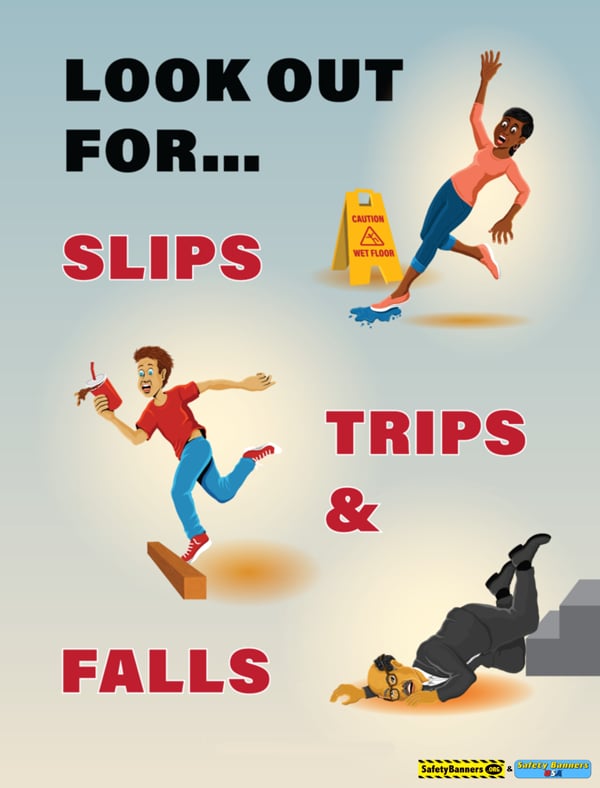
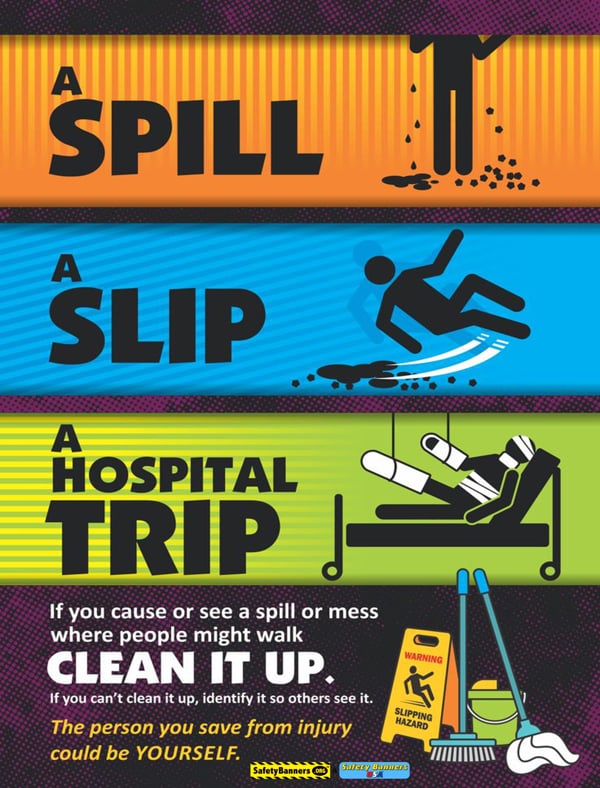
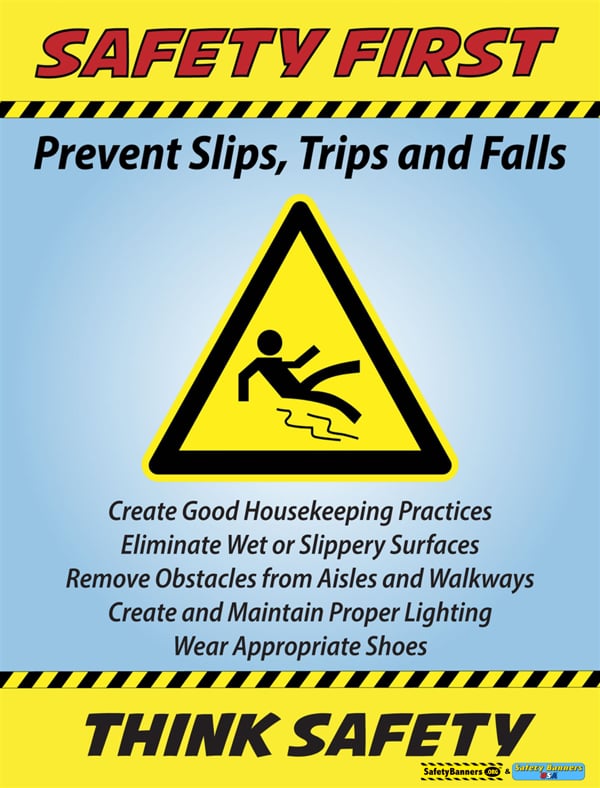
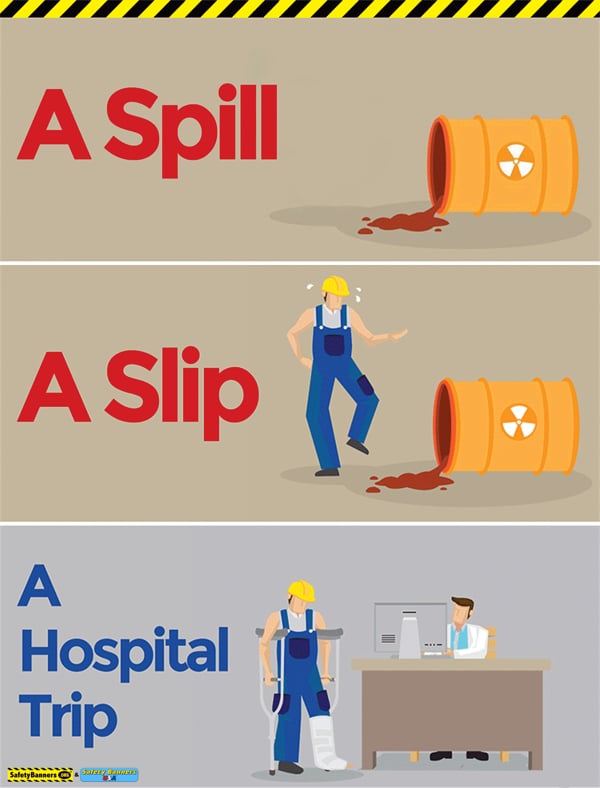
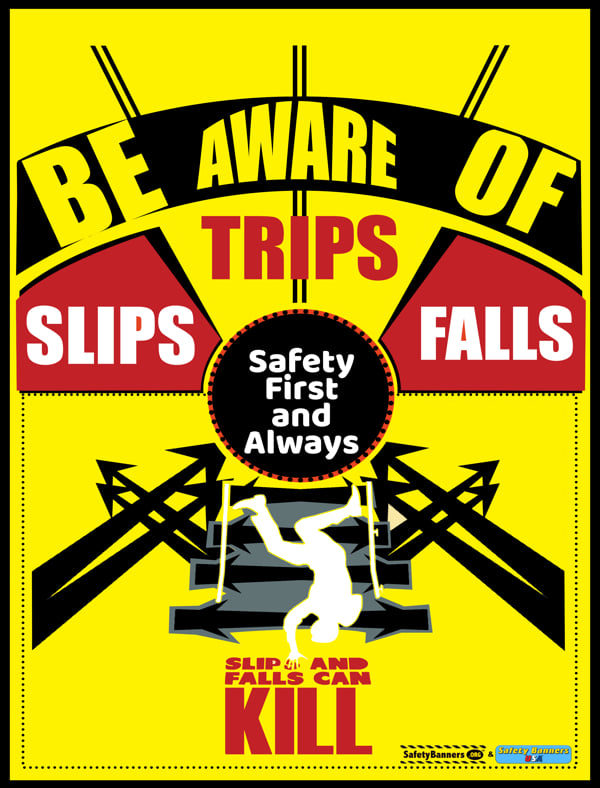
Free Slips, Trips and Falls Safety Posters brought to you by SafetyBanners.Org and Safety Banners USA in Memphis, Tennessee.
Slips, Trips, and Falls in American Industrial Facilities
Slips, Trips, and Falls in American Industrial Facilities are a Major Threat to American Workers
Slips, trips, and falls are one of the most common causes of injuries in the workplace, particularly in industrial environments. According to the National Safety Council (NSC), STFs account for approximately 25% of all reported injury claims and are responsible for nearly 17% of all disabling work-related injuries in the United States. The impact of such incidents is far-reaching, both in terms of physical harm to employees and financial losses for companies. In industrial facilities, where the environment often presents additional hazards, the consequences can be even more severe. This article will explore how slips, trips, and falls injure American workers in industrial settings and outline effective strategies for reducing these risks.
• The Scope of the Problem
Slips, trips, and falls are deceptively simple accidents but can lead to severe, life-altering injuries. Common injuries resulting from STFs include:
- Fractures: Particularly in the arms, legs, hips, and wrists.
- Sprains and strains: Affecting muscles, tendons, and ligaments, especially in the back and knees.
- Head injuries: From minor concussions to traumatic brain injuries.
- Cuts and bruises: Caused by hitting machinery or sharp objects during the fall.
In industrial facilities, these injuries can be exacerbated by environmental conditions, such as wet or oily floors, uneven surfaces, cluttered workspaces, and poor lighting. Workers in these environments often face additional hazards like heavy machinery, chemical spills, and the need for protective gear, which may reduce mobility or vision, increasing the likelihood of an accident.
The Occupational Safety and Health Administration (OSHA) reports that slips, trips, and falls are the second most common cause of fatal workplace injuries in the U.S. industrial sector, surpassed only by transportation-related incidents. Every year, thousands of American workers are injured, resulting in days away from work, medical expenses, lost productivity, and increased insurance premiums for companies. The direct and indirect costs associated with STFs can be overwhelming, making prevention a top priority for industrial employers.
• Causes of Slips, Trips, and Falls in Industrial Facilities
Understanding the underlying causes of slips, trips, and falls is crucial for effective prevention. The main contributors to STFs in industrial environments include:
- Slippery Surfaces: One of the leading causes of slips is the presence of liquid on the floor, whether it’s water, oil, chemicals, or spilled substances from production processes. In industries such as food processing, manufacturing, and warehousing, floors are often exposed to moisture, which significantly increases the risk of slips.
- Uneven or Damaged Flooring: Industrial facilities often experience high foot traffic, which can wear down flooring over time. Uneven surfaces, cracks, holes, and loose floor tiles can create trip hazards. Additionally, improper flooring materials that lack adequate slip resistance can further elevate the risks.
- Cluttered Work Areas: Tools, equipment, cables, and materials left lying around in workspaces create obstacles that workers can easily trip over. In fast-paced industrial settings where deadlines are critical, the buildup of clutter may go unnoticed, increasing the chance of an accident.
- Poor Lighting: Inadequate lighting makes it difficult for workers to spot hazards, such as spills, debris, or uneven surfaces. Areas that are dimly lit or have fluctuating light levels, such as storage areas, stairwells, and outdoor work zones, are particularly vulnerable.
- Inappropriate Footwear: Workers in industrial facilities often need specialized footwear to protect against various hazards, such as falling objects or chemical exposure. However, if these shoes lack proper traction, they can contribute to slips and falls. Moreover, improper or worn-out footwear can increase fatigue, leading to missteps.
- Obstructed Walkways: Forklifts, pallets, and production equipment can obstruct walkways, forcing workers to navigate around them. Narrow or congested spaces increase the likelihood of someone tripping, especially when carrying heavy loads that block their line of sight.
- Human Factors: Fatigue, distraction, rushing, and complacency are common human factors contributing to slips, trips, and falls. Workers may be less attentive to their surroundings when they are tired or focused on meeting tight deadlines.
- Slips Trips and Falls injury Outcomes and Their Economic Impact
The injuries caused by slips, trips, and falls vary in severity but can be debilitating. Fractures are one of the most common outcomes, often requiring surgery and long recovery periods. Other injuries, such as sprains and strains, can result in long-term pain and limited mobility, affecting a worker's ability to perform their job. In severe cases, STFs can result in permanent disability or death.
The financial implications of these injuries are significant. According to the National Safety Council, the average direct cost of a slip, trip, or fall injury is approximately $40,000. This figure includes medical treatment, rehabilitation, and workers' compensation claims. Indirect costs, such as lost productivity, training replacement workers, and increased insurance premiums, can drive the total cost even higher.
For businesses, these costs can be crippling, especially for smaller companies with limited resources. Beyond the immediate financial impact, slip and fall injuries can damage a company’s reputation, lead to increased regulatory scrutiny, and result in legal liabilities if negligence is proven.
• Prevention Strategies for Industrial Facilities
Preventing slips, trips, and falls in industrial facilities requires a comprehensive approach that addresses both environmental factors and human behavior. By implementing the following strategies, companies can significantly reduce the risk of STF incidents:
- Implement a Proactive Housekeeping Program: Regular housekeeping is essential for maintaining a safe working environment. Companies should establish a daily cleaning routine that includes promptly cleaning up spills, removing debris, and keeping walkways clear. Assigning responsibility for housekeeping tasks to specific employees can ensure accountability.
- Maintain Floors and Surfaces: Flooring should be regularly inspected for wear and tear. Damaged areas should be promptly repaired, and non-slip coatings should be applied where necessary, particularly in areas prone to moisture or oil exposure. Additionally, mats or floor coverings with good traction should be used in areas that frequently become wet.
- Install Proper Drainage Systems: In industrial environments where liquids are commonly spilled, such as in food processing plants or automotive workshops, having adequate drainage is crucial. Poor drainage can lead to standing water, increasing the risk of slips.
- Provide Adequate Lighting: Ensuring that all work areas are well-lit is critical for preventing accidents. High-risk areas such as staircases, loading docks, and storage rooms should have sufficient lighting to make hazards visible. Installing motion sensors or automatic lighting systems can help maintain adequate illumination in seldom-used areas.
- Educate and Train Employees: Workers should receive regular training on the hazards of slips, trips, and falls, as well as the importance of maintaining a clean and organized workspace. Training should also emphasize the proper use of equipment and the importance of wearing the right footwear for the job.
- Use Signage and Barriers: Clearly marking hazardous areas with warning signs or temporary barriers can prevent workers from entering dangerous zones. For example, if a floor is wet from cleaning, placing visible warning signs will alert employees to the slip hazard.
- Enforce Proper Footwear Policies: Industrial employers should enforce footwear policies that require employees to wear shoes with slip-resistant soles. Regular inspections should be conducted to ensure that footwear is in good condition, and workers should be educated on how to choose the appropriate footwear for their specific job tasks.
- Encourage Reporting of Hazards: Employees should be encouraged to report hazards such as spills, damaged floors, or obstructed walkways immediately. Creating an open environment where workers feel comfortable raising safety concerns can help prevent accidents before they occur.
- Leverage Technology: Modern safety solutions can help reduce STF risks. For example, slip-resistant flooring materials and anti-fatigue mats can help reduce the likelihood of falls in high-traffic areas. Additionally, some companies are experimenting with wearable technology, such as sensors that detect fatigue or monitor a worker's posture, to predict and prevent falls.
- Conduct Regular Risk Assessments: Employers should regularly assess their facilities for STF risks and take corrective actions where necessary. This includes evaluating the condition of floors, checking for obstacles in walkways, and reviewing housekeeping protocols. Engaging safety professionals or conducting third-party safety audits can provide valuable insights into potential hazards.
At the end of the day, Slips, trips, and falls are a significant hazard in industrial facilities, contributing to a large portion of workplace injuries in the United States. The physical and financial toll of these accidents is substantial, but with proper prevention measures, companies can drastically reduce the risk of STFs. By fostering a culture of safety, maintaining clean and organized workplaces, providing adequate training, and using advanced technology, industrial employers can protect their workers from harm and create a safer, more productive working environment.
Preventing slips, trips, and falls is not only a regulatory requirement but also a moral and financial imperative. When employees feel safe, they are more productive, and companies benefit from fewer injuries, reduced costs, and improved workplace morale.
Researched and Provided by SafetyBanners.Org
Memphis, Tennessee