Keep Scrolling for More Images!
From America's #1 Safety Banner Company
• The Most Trusted Name in Industrial Safety Banners
Humans in USA Support email: This email address is being protected from spambots. You need JavaScript enabled to view it..
Humans in USA Phone Support: (901) 321-8374
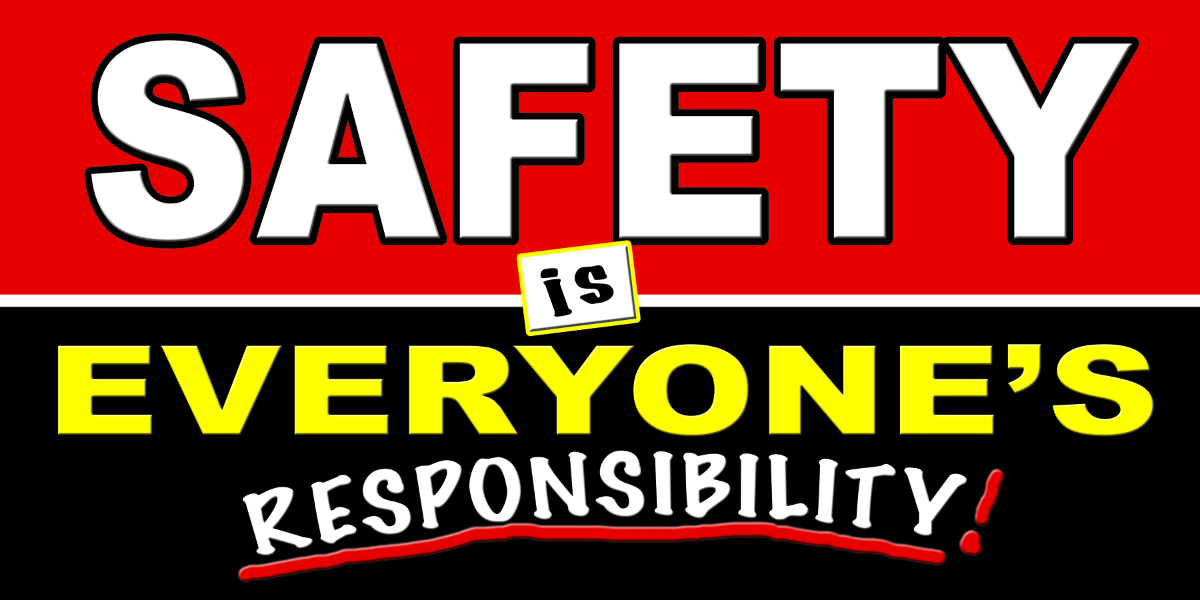 Designed by SafetyBanners.Org in 2008
This Safety Banner Is The Most Copied Industrial Safety Banner in the World.
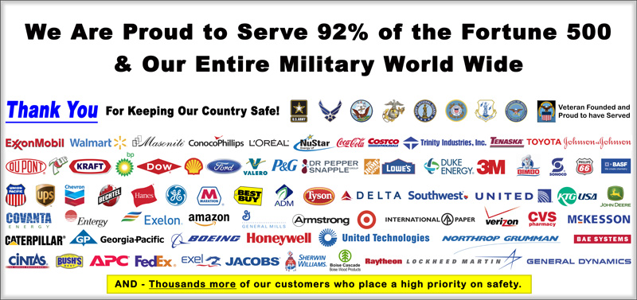 • ONLY SafetyBanners.Org has ALL of These Capabilities
• Largest Selection, Including Spanish Language
• The Most Options for price, size & materials PLUS horizontal & vertical format.
• The Highest Quality safety banners.
• The Greatest Customization capability.
• Fast Delivery
• Low Cost
• 100% Satisfaction Guaranteed, no questions asked.
• 100% American Made in Tennessee.
Only from SafetyBanners.Org & Safety Banners USA
-----------------------------------------------------------------------------------------------------------------------------------
The 34 Product Categories on your left are extremely helpful to safety banner buyers.
Our 34 safety banner categories are:
• Our Most Popular Safety Banners
• New banners
• General Safety Awareness
• Attitude and Teamwork
• Cell Phone Use
• Christmas and Fall
• Driving Safely
• Ergonomics
• Eye Protection
• Family Series
• Fire Safety
• Flu & Covid Prevention
• Forklift Safety
• Green Banners
• Hand Safety
• Hearing Protection
• Heat Stress and Heat Stroke
• Housekeeping
• Jet Lovers
• Lifting Safety
• Lock Out Tag Out
• Nature and Outdoors
• Oil refinery turnaround
• PPE Collection
• Quality Series
• Safety Series
• Spring safety
• Slips, Trips & Falls
• Spanish & Bilingual
• Thank You
• Troop support
• VPP collection
• Winter Series
•Translation to Spanish
• Custom safety banners
72,000 Safety Banners and Safety Poster Product Choices in our safety banner and safety poster store.
CLICK HERE for our NEW safety store, Safety Banners USA (safetybannersUSA.com)
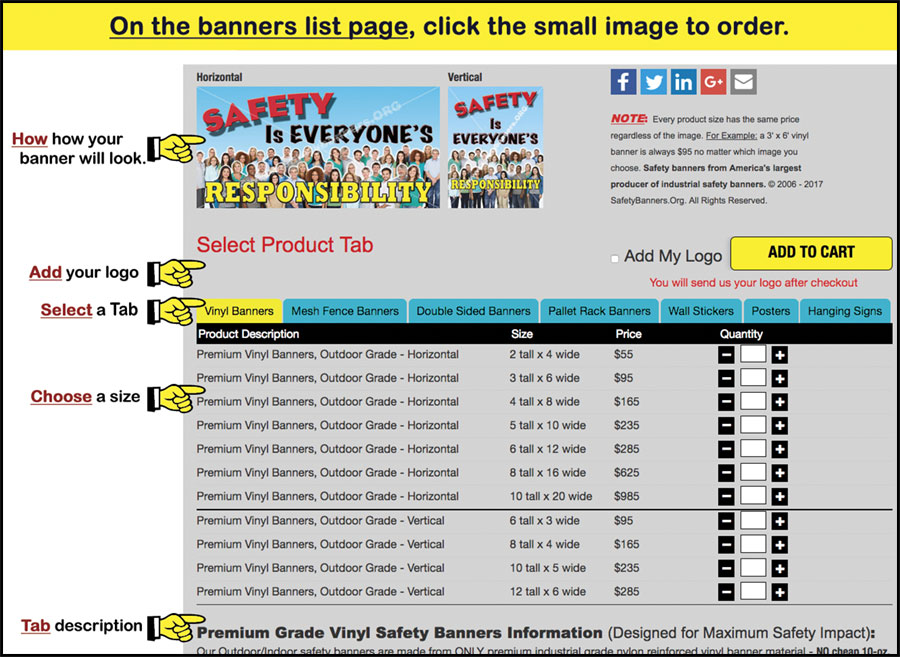
Review the graphic below to beter understand how to navigate our safety banner store
<<< Once you are in the store all the product categories are on your left <<<
 xxxxxx
All our product categories are on your left. CLICK HERE to see our Most Popular Safety Banners.
SafetyBanners.Org
1657 Shelby Oaks Drive N.
Memphis, TN 38134
Serving American industry since 1995
FREE Slips, Trips and Falls safety posters below will help keep your workers safe and productivity highat your facility.
CLICK HERE for our NEW safety store, Safety Banners USA (safetybannersUSA.com)
Slips, Trips and Falls account for 42% of all major injuries at an American industrial workplace. Slips, trips and falls are definately a safety problem in American industry
Our FREE Slips, Trips and Falls safety posters fit perfectly on a standard 8 1/2” piece paper and can be printed from any office printer. Plus, they are high enough resolution the you can send them out to you local sign shop and have them printed at a much larger size.
Our goal at SafetyBanners.Org and Safety Banners USA is to do our best to supply our customers with the most effective and highest quality safety banners in America.
Click a free poster below to down load it and help you facility reduce Slips, Trips and falls.
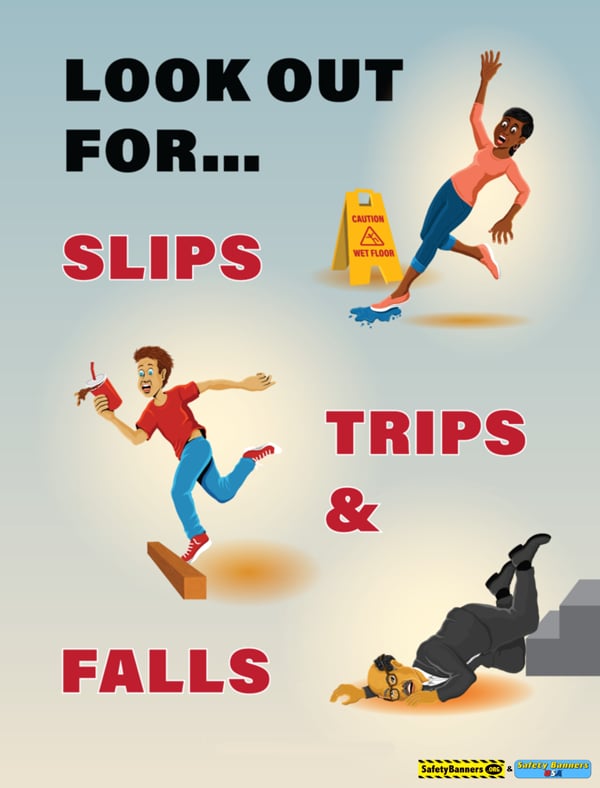
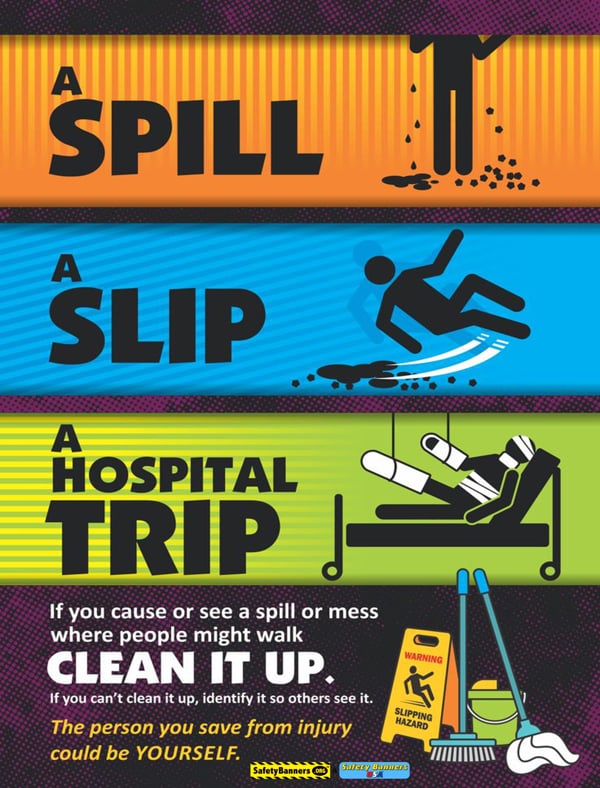
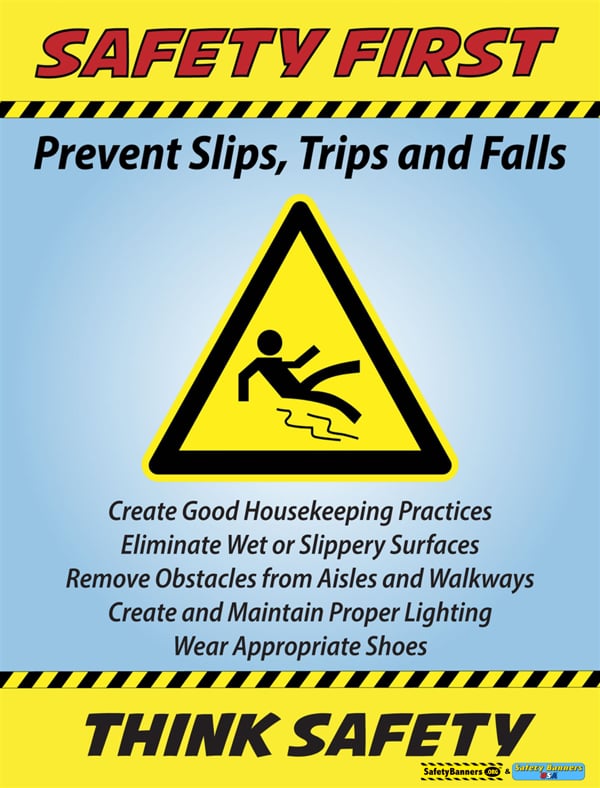
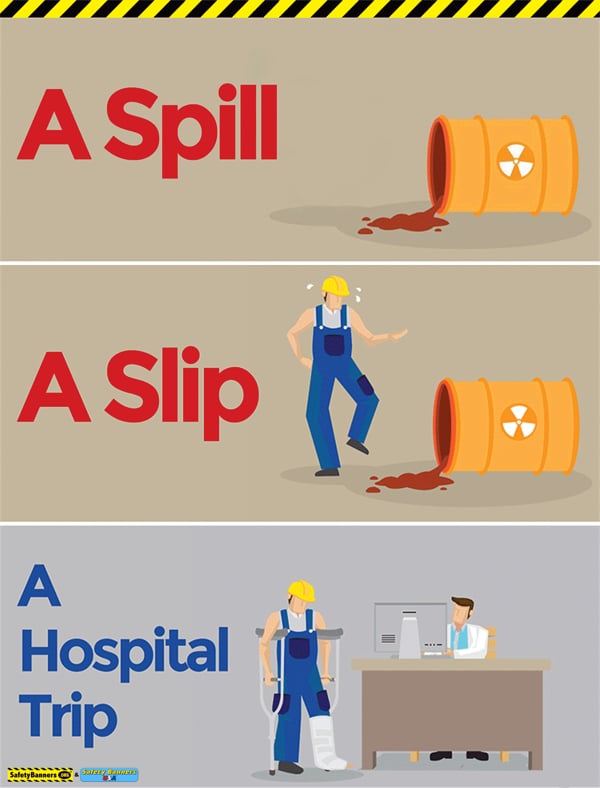
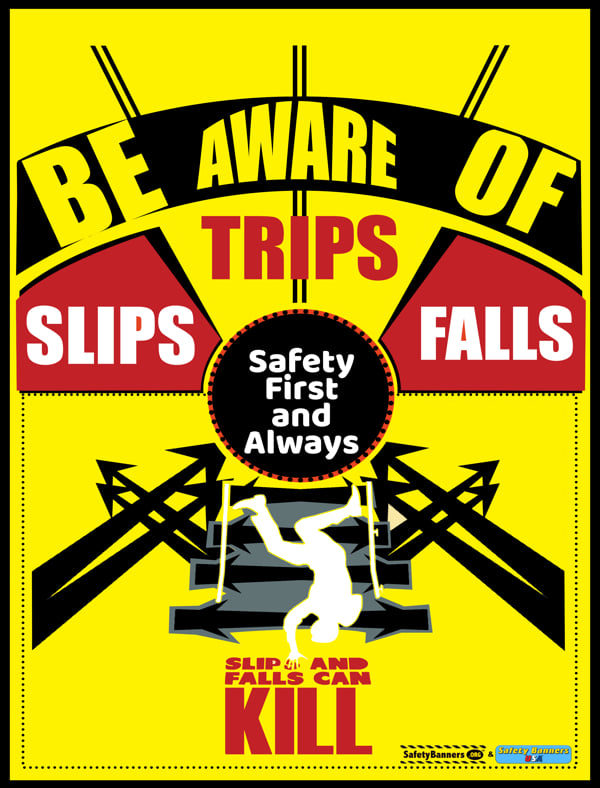
Free Slips, Trips and Falls Safety Posters brought to you by SafetyBanners.Org and Safety Banners USA in Memphis, Tennessee.
Slips, Trips, and Falls in American Industrial Facilities
Slips, Trips, and Falls in American Industrial Facilities are a Major Threat to American Workers
Slips, trips, and falls are one of the most common causes of injuries in the workplace, particularly in industrial environments. According to the National Safety Council (NSC), STFs account for approximately 25% of all reported injury claims and are responsible for nearly 17% of all disabling work-related injuries in the United States. The impact of such incidents is far-reaching, both in terms of physical harm to employees and financial losses for companies. In industrial facilities, where the environment often presents additional hazards, the consequences can be even more severe. This article will explore how slips, trips, and falls injure American workers in industrial settings and outline effective strategies for reducing these risks.
• The Scope of the Problem
Slips, trips, and falls are deceptively simple accidents but can lead to severe, life-altering injuries. Common injuries resulting from STFs include:
In industrial facilities, these injuries can be exacerbated by environmental conditions, such as wet or oily floors, uneven surfaces, cluttered workspaces, and poor lighting. Workers in these environments often face additional hazards like heavy machinery, chemical spills, and the need for protective gear, which may reduce mobility or vision, increasing the likelihood of an accident.
The Occupational Safety and Health Administration (OSHA) reports that slips, trips, and falls are the second most common cause of fatal workplace injuries in the U.S. industrial sector, surpassed only by transportation-related incidents. Every year, thousands of American workers are injured, resulting in days away from work, medical expenses, lost productivity, and increased insurance premiums for companies. The direct and indirect costs associated with STFs can be overwhelming, making prevention a top priority for industrial employers.
• Causes of Slips, Trips, and Falls in Industrial Facilities
Understanding the underlying causes of slips, trips, and falls is crucial for effective prevention. The main contributors to STFs in industrial environments include:
The injuries caused by slips, trips, and falls vary in severity but can be debilitating. Fractures are one of the most common outcomes, often requiring surgery and long recovery periods. Other injuries, such as sprains and strains, can result in long-term pain and limited mobility, affecting a worker's ability to perform their job. In severe cases, STFs can result in permanent disability or death.
The financial implications of these injuries are significant. According to the National Safety Council, the average direct cost of a slip, trip, or fall injury is approximately $40,000. This figure includes medical treatment, rehabilitation, and workers' compensation claims. Indirect costs, such as lost productivity, training replacement workers, and increased insurance premiums, can drive the total cost even higher.
For businesses, these costs can be crippling, especially for smaller companies with limited resources. Beyond the immediate financial impact, slip and fall injuries can damage a company’s reputation, lead to increased regulatory scrutiny, and result in legal liabilities if negligence is proven.
• Prevention Strategies for Industrial Facilities
Preventing slips, trips, and falls in industrial facilities requires a comprehensive approach that addresses both environmental factors and human behavior. By implementing the following strategies, companies can significantly reduce the risk of STF incidents:
At the end of the day, Slips, trips, and falls are a significant hazard in industrial facilities, contributing to a large portion of workplace injuries in the United States. The physical and financial toll of these accidents is substantial, but with proper prevention measures, companies can drastically reduce the risk of STFs. By fostering a culture of safety, maintaining clean and organized workplaces, providing adequate training, and using advanced technology, industrial employers can protect their workers from harm and create a safer, more productive working environment.
Preventing slips, trips, and falls is not only a regulatory requirement but also a moral and financial imperative. When employees feel safe, they are more productive, and companies benefit from fewer injuries, reduced costs, and improved workplace morale.
Researched and Provided by SafetyBanners.Org
Memphis, Tennessee