Keep Scrolling for More Images!
From America's #1 Safety Banner Company
• The Most Trusted Name in Industrial Safety Banners
Humans in USA Support email: This email address is being protected from spambots. You need JavaScript enabled to view it..
Humans in USA Phone Support: (901) 321-8374
 Designed by SafetyBanners.Org in 2008
This Safety Banner Is The Most Copied Industrial Safety Banner in the World.
 • ONLY SafetyBanners.Org has ALL of These Capabilities
• Largest Selection, Including Spanish Language
• The Most Options for price, size & materials PLUS horizontal & vertical format.
• The Highest Quality safety banners.
• The Greatest Customization capability.
• Fast Delivery
• Low Cost
• 100% Satisfaction Guaranteed, no questions asked.
• 100% American Made in Tennessee.
Only from SafetyBanners.Org & Safety Banners USA
-----------------------------------------------------------------------------------------------------------------------------------
The 34 Product Categories on your left are extremely helpful to safety banner buyers.
Our 34 safety banner categories are:
• Our Most Popular Safety Banners
• New banners
• General Safety Awareness
• Attitude and Teamwork
• Cell Phone Use
• Christmas and Fall
• Driving Safely
• Ergonomics
• Eye Protection
• Family Series
• Fire Safety
• Flu & Covid Prevention
• Forklift Safety
• Green Banners
• Hand Safety
• Hearing Protection
• Heat Stress and Heat Stroke
• Housekeeping
• Jet Lovers
• Lifting Safety
• Lock Out Tag Out
• Nature and Outdoors
• Oil refinery turnaround
• PPE Collection
• Quality Series
• Safety Series
• Spring safety
• Slips, Trips & Falls
• Spanish & Bilingual
• Thank You
• Troop support
• VPP collection
• Winter Series
•Translation to Spanish
• Custom safety banners
Safety Banners for Lifting Properly.
Safety Banners built in Memphis, Tennesseee USA.
Our safety banners about lifting properly are used by most of the Fortune 500 companies
CLICK HERE for our NEW safety store, Safety Banners USA (safetybannersUSA.com)
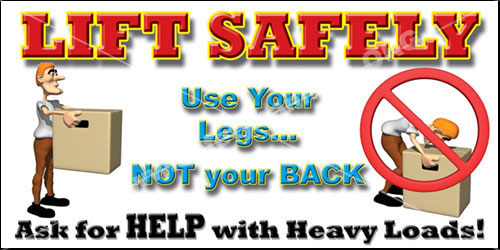 Using proper lifting techniques prevents lifting back injuries! Safety Banners Can help.
Lifting properly is a very important aspect of preventing back problems. Preventing back injuries is a major challenge for employers. According to the Bureau of Labor Statistics, more than one million workers suffer back injuries each year. Typically, back injuries account for 20% of all workplace injuries and illnesses, and one-fourth of all compensation claims are a result of back injuries. The pain and discomfort of back injuries can have a dramatic change in employee productivity.
A Bureau of Labor Statistics survey shows that four out of five back injuries were to the lower back, and that three out of four occurred while lifting. This survey shows the importance of reducing back injuries caused by lifting. Although no 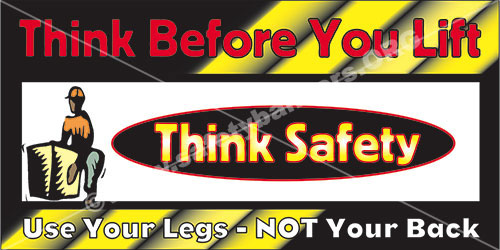 approach has completely eliminated such injuries, a substantial portion could be prevented by incorporating an effective control program along with an ergonomics analysis and design of work tasks.
OSHA has evaluated ways to help prevent lifting injuries. They specify two types of controls: engineering and administrative.
Engineering controls are used to redesign the workstation to minimize lifting hazards. Administrative controls include carefully selecting and training workers, so that they can perform their jobs safely.
Suggested administrative controls include:
Strength testing of existing workers: Studies have shown strength testing can prevent up to one-third of all work-related injuries. Through the strength-testing process, employers can discourage employees from performing tasks that exceed their strength capacities.
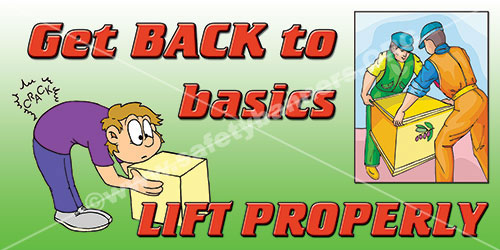 Physical conditioning or stretching programs - - These programs are implemented to reduce the risk of muscle strain.
Training - - Employees should be trained to utilize proper lifting techniques that place minimum stress on the lower back.
How To Lift Safety:
Before lifting, take a moment to think about what you are about to do. Examine the object for sharp corners, slippery spots or other potential hazards. Know your limit and do not try to exceed it. Ask for help if needed. Or if possible, divide the load to make it lighter. Know where you are going to set the item down and make sure the destination and your path are free of obstructions. Then follow these steps.
1. Stand close to the load with your feet spread shoulder width apart. One foot should be slightly in front of the other for balance.
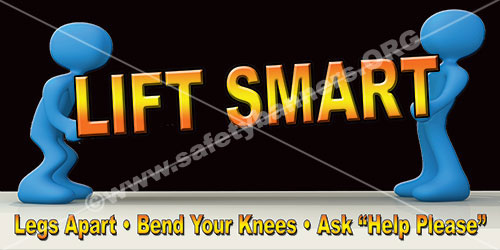 2. Squat down bending at the knees (not your waist). Tuck your chin while keeping your back as vertical as possible.
3. Get a firm grasp of the object before beginning the lift.
4. Slowly begin straightening your legs, lifting slowly. Never twist your body during this step.
5. Once the lift is complete, keep the object as close to the body as possible. If the load's center of gravity moves away from your body, there is a dramatic increase in stress to the lumbar region of the back.
SafetyBanners.Org
1657 Shelby Oaks Drive N.
Memphis, TN 38134
Serving American industry since 1995
Safety Banners for Heat Stroke and Heat Stress
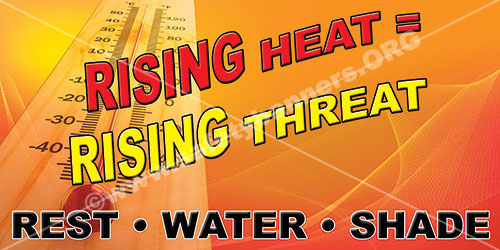
Heat Stroke and Heat Stress Safety Banners help prevent heat stroke and heat stress.
CLICK HERE for our NEW safety store, Safety Banners USA (safetybannersUSA.com)
Our Safety Banners for Heat Stroke and Stress are used by most of the Fortune 500 companies!
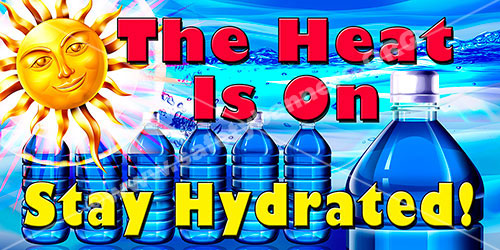 Heat Stroke and Heat Stress Safety Banners - Horizontal – Vertical – we do BOTH. SafetyBanners.Org is the ONLY safety banners manufacturer that offers Heat Stroke / Stress safety banners in BOTH Horizontal AND Vertical Format.
- - Heat Stroke and Heat Stress information:
Exposure to extreme heat can result in illnesses and injuries. Heat stress can result in heat stroke, heat exhaustion, heat cramps, or heat rashes. Heat can also increase the risk of injuries in workers as it may result in sweaty palms, fogged-up safety glasses, and dizziness. Burns may also occur as a result of accidental contact with hot surfaces or steam.
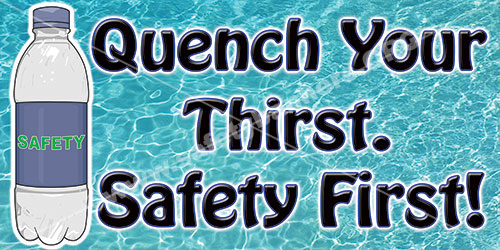 Workers at risk of heat stress include outdoor workers and workers in hot environments such as firefighters, bakery workers, farmers, construction workers, miners, boiler room workers, factory workers, and others. Workers at greater risk of heat stress include those who are 65 years of age or older, are overweight, have heart disease or high blood pressure, or take medications that may be affected by extreme heat.
Prevention of heat stress in workers is important.
- Heat Stroke
Heat stroke is the most serious heat-related disorder. It occurs when the body becomes unable to control its temperature: the body's temperature rises rapidly, the sweating mechanism fails, and the body is unable to cool down. When heat stroke occurs, the body temperature can rise to 106 degrees Fahrenheit or higher within 10 to 15 minutes. Heat stroke can cause death or permanent disability if emergency treatment is not given.
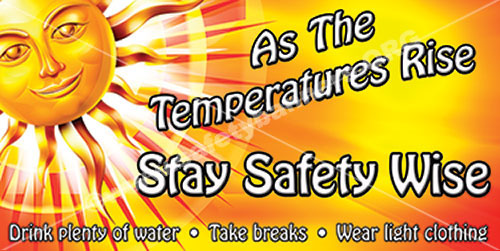 Symptoms of Heat Stroke include:
Hot, dry skin or profuse sweating
Hallucinations
Chills
Throbbing headache
High body temperature
Confusion/dizziness
Slurred speech
First Aid to treat a worker with Heat Stroke:
Call 911 immediately and notify their supervisor.
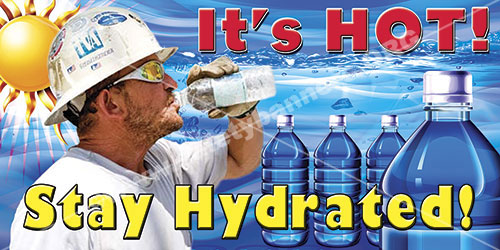 Move the sick worker to a cool shaded area.
Cool the worker using methods such as: Soaking their clothes with water.
Spraying, sponging, or showering them with water.
Fanning their body.
- Heat Exhaustion
Heat exhaustion is the body's response to an excessive loss of the water and salt, usually through excessive sweating. Workers most prone to heat exhaustion are those that are elderly, have high blood pressure, and those working in a hot environment.
Symptoms of Heat Exhaustion:
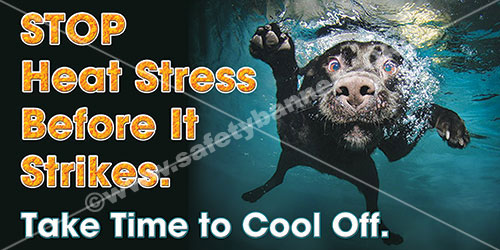 Heavy sweating
Extreme weakness or fatigue
Dizziness, confusion
Nausea
Clammy, moist skin
Pale or flushed complexion
Muscle cramps
Slightly elevated body temperature
Fast and shallow breathing
 First Aid for Heat Exhaustion:
Have them rest in a cool, shaded or air-conditioned area.
Have them drink plenty of water or other cool, nonalcoholic beverages.
Have them take a cool shower, bath, or sponge bath.
- Heat Syncope
Heat syncope is a fainting (syncope) episode or dizziness that usually occurs with prolonged standing or sudden rising from a sitting or lying position. Factors that may contribute to heat syncope include dehydration and lack of acclimatization.
Symptoms of Heat Syncope include:
Light-headedness
Dizziness
Fainting
First Aid for Heat Syncope:
Workers with heat syncope should:
Sit or lie down in a cool place when they begin to feel symptoms.
Slowly drink water, clear juice, or a sports beverage.
- Heat Cramps
Heat cramps usually affect workers who sweat a lot during strenuous activity. This sweating depletes the body's salt and moisture levels. Low salt levels in muscles causes painful cramps. Heat cramps may also be a symptom of heat exhaustion.
Symptoms of Heat Cramps:
Muscle pain or spasms usually in the abdomen, arms, or legs.
First Aid for Heat Cramps:
Stop all activity, and sit in a cool place.
Drink clear juice or a sports beverage.
Do not return to strenuous work for a few hours after the cramps subside because further exertion may lead to heat exhaustion or heat stroke.
Seek medical attention if any of the following apply: The worker has heart problems.
The worker is on a low-sodium diet.
The cramps do not subside within one hour.
- Heat Rash
Heat rash is a skin irritation caused by excessive sweating during hot, humid weather.
Symptoms of Heat Rash:
Symptoms of heat rash include:
Heat rash looks like a red cluster of pimples or small blisters.
It is more likely to occur on the neck and upper chest, in the groin, under the breasts, and in elbow creases.
Heat Stroke and Heat Stress Safety Banners help prevent heat stroke and heat stress.
SafetyBanners.Org
1657 Shelby Oaks Drive N.
Memphis, TN 38134
Serving American industry since 1995